Investigative Report: Agents, Commissions, and the Rising Cost of Rent in Ghana
Emmanuel Preko Boamah
February 13, 2026 • 5 min read
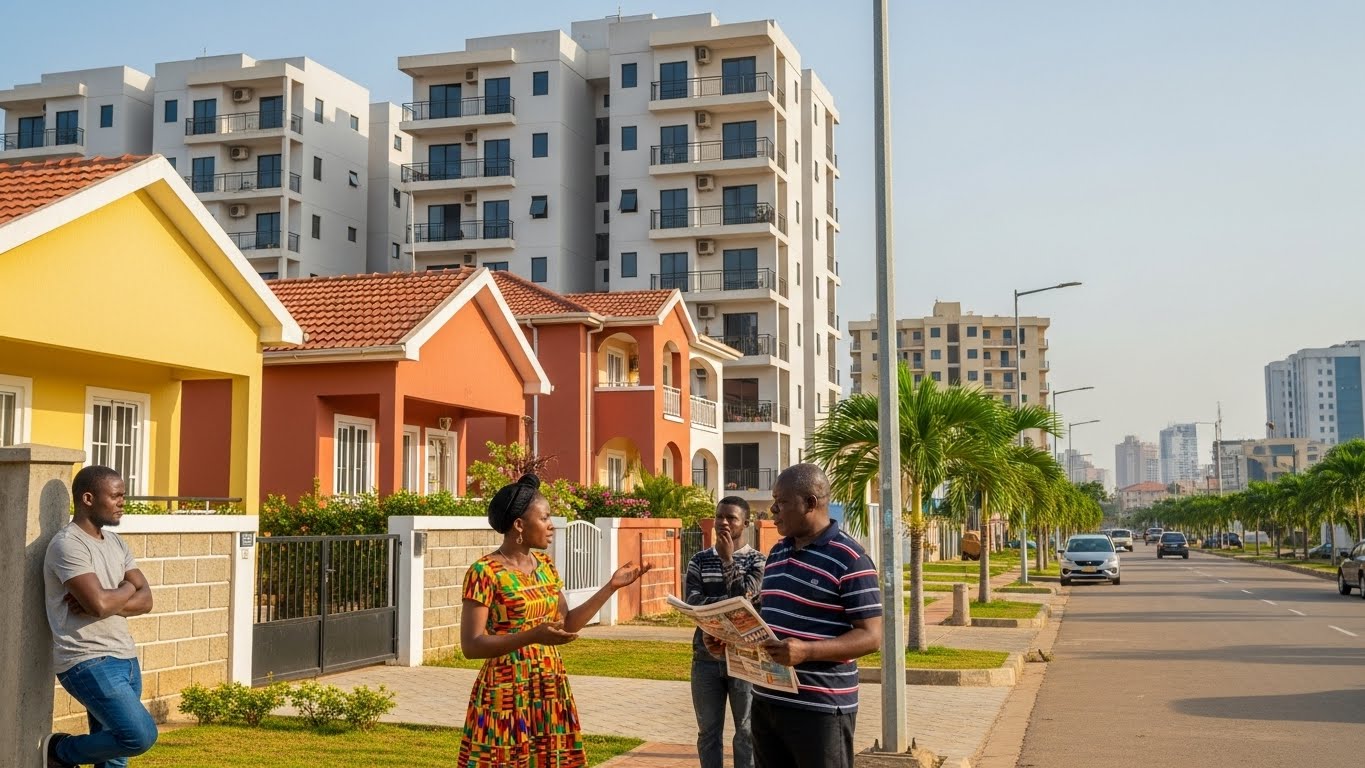
The Struggle Behind the Keys
In Accra’s Madina neighborhood, Ama, a young nurse, recalls the day she finally found a two-bedroom apartment. The rent was GHS 18,000 for two years. But just as she was ready to pay, the agent demanded an additional GHS 1,800 as commission. “I told him I couldn’t afford it,” Ama says. “He replied, ‘If you don’t pay, someone else will.’ I had no choice.”
Ama’s story is not unique. Across Ghana, tenants are being forced to pay commissions that the Rent Control Department insists are not their responsibility. Yet agents continue to demand them, exploiting the desperation of renters in a tight housing market.
The Commission Trap
Our investigation found that most agents charge 10% of the total rent or demand one month’s rent upfront. For tenants, this means thousands of cedis in extra costs.
Kwame, a teacher in Kumasi, shared his ordeal: “I paid three years’ rent in advance—GHS 27,000. Then the agent asked for GHS 2,700 commission. I had to borrow from a friend. By the time I moved in, I had nothing left for furniture.”
The Rent Control Department has clarified that commissions are legally the landlord’s responsibility. But enforcement is weak, and agents continue to shift the burden onto tenants.
Why Agents Push Rent Higher
Interviews with agents revealed a troubling incentive structure:
- Commission is tied to rent value. The higher the rent, the bigger the agent’s cut.
- Agents prioritize expensive properties. Landlords with higher-priced homes are more attractive, creating upward pressure on rents.
- Income sustainability. With property sales less frequent, agents rely on rental commissions as steady income.
One agent in Accra admitted off-record: “If I convince the landlord to raise the rent, I also raise my commission. It’s business.”
The Human Toll
Tenants are paying the price:
- Financial strain. Many renters must borrow or deplete savings to cover rent plus commission.
- Reduced access. Low-income families are priced out of desirable areas, worsening inequality.
- Distrust. Tenants increasingly view agents as exploiters rather than facilitators.
In Sunyani, a university graduate searching for housing summed it up: “Agents are supposed to help us, but they make life harder. It feels like we’re paying for their greed.”
Legal Grey Area
Despite Rent Control’s clear stance, enforcement remains minimal. Housing experts warn that commission-driven rent hikes distort the market, undermine affordability, and widen the gap between rich and poor.
A Rent Control officer told us: “Tenants are not supposed to pay commission. But agents know people are desperate. Until enforcement improves, this practice will continue.”
This investigation shows that agent commissions are not just a side cost—they are a hidden driver of rent inflation in Ghana. By tying earnings to rent value, agents are incentivized to push rates higher, leaving tenants to shoulder the burden. Without stronger enforcement of rent laws and reforms to commission structures, Ghana’s rental housing market risks becoming increasingly inaccessible to ordinary citizens.
Policy Recommendations: What Can Be Done?
1. Enforce Rent Control Laws
The Rent Control Department has already clarified that tenants are not legally responsible for paying agent commissions. What’s missing is enforcement.
- Recommendation: Establish a hotline or reporting system where tenants can lodge complaints against agents demanding illegal commissions.
- Impact: This would deter agents from exploiting renters and restore trust in the housing market.
2. Shift Commission Responsibility to Landlords
Globally, landlords typically pay agents for their services, not tenants. Ghana could adopt this model more strictly.
- Recommendation: Amend rental agreements to explicitly state that landlords bear commission costs.
- Impact: This would remove the financial burden from tenants and align Ghana with international best practices.
3. Introduce Flat-Fee Commission Models
Percentage-based commissions incentivize agents to inflate rents. A flat-fee model would break this link.
- Recommendation: Standardize agent fees (e.g., a fixed GHS 1,000 per rental transaction).
- Impact: Agents would still earn fairly, but without pushing rents higher.
4. Tenant Advocacy and Education
Many tenants are unaware of their rights under Ghana’s Rent Law.
- Recommendation: Launch public awareness campaigns through radio, TV, and social media to educate tenants about commission rules.
- Impact: Empowered tenants would resist illegal charges and demand fair treatment.
5. Digital Rental Platforms
Technology can reduce reliance on agents by connecting landlords and tenants directly.
- Recommendation: Encourage the development of verified online rental platforms where tenants can access properties without middlemen.
- Impact: This would cut out unnecessary commissions and increase transparency in the rental market.
Conclusion
Our investigation shows that agent commissions are not just a side cost—they are a hidden driver of rent inflation in Ghana. By tying earnings to rent value, agents are incentivized to push rates higher, leaving tenants to shoulder the burden.
But solutions exist: stronger enforcement of Rent Control laws, shifting commission responsibility to landlords, adopting flat-fee models, educating tenants, and leveraging digital platforms. If implemented, these reforms could transform Ghana’s rental housing market into one that is fairer, more transparent, and more accessible to ordinary citizens.
Related Posts
INCOME TAX ACT, 2015 (ACT 896) AS AMENDED
Mar 18, 2026

3 Mistakes Tenants Make When Renting in Ghana
Jan 14, 2026