
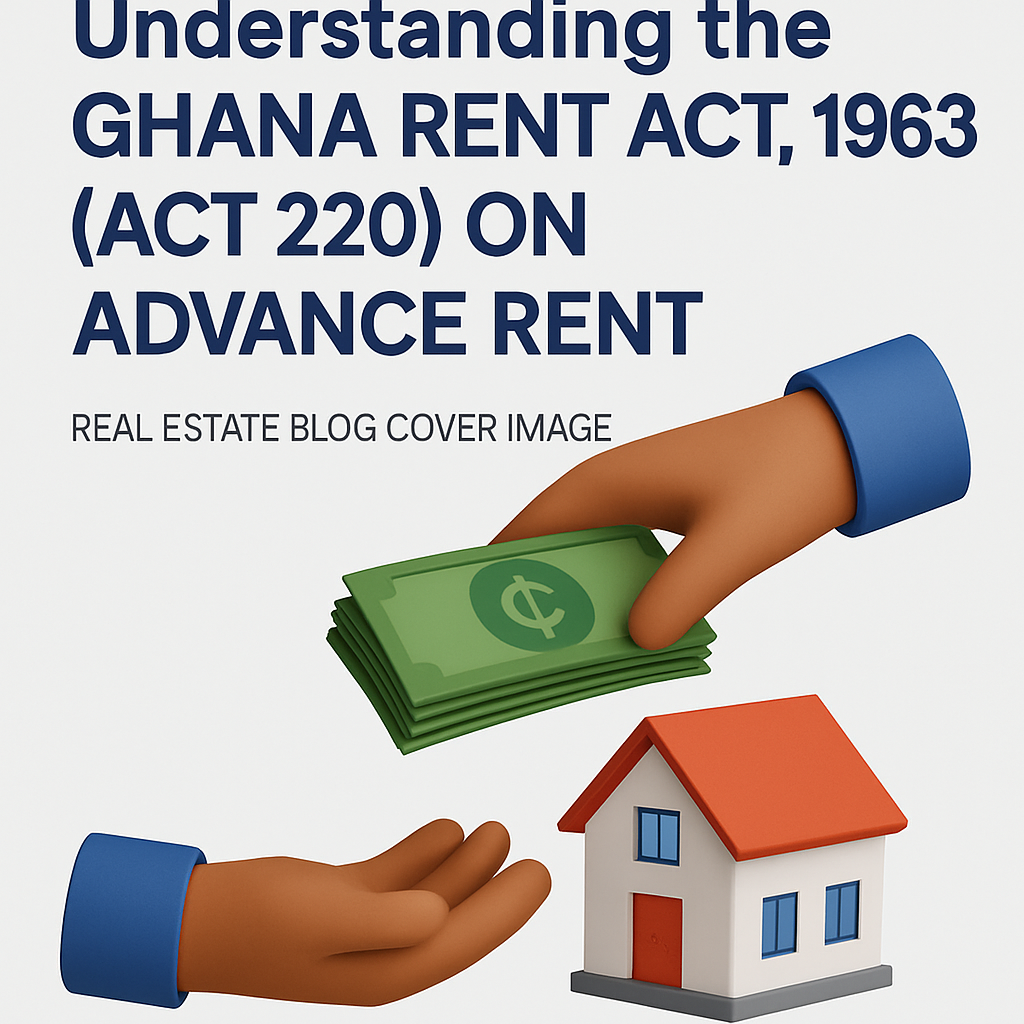
Understanding the Ghana Rent Act, 1963 (Act 220) on Advance Rent
This article explores the Ghana Rent Act, 1963 (Act 220) regarding advance rent, discussing legal limits, offences, and the rights of landlords and tenants.
Advance rent remains one of the most widely discussed issues in Ghana's rental housing sector. Many disputes between landlords and tenants arise from differing interpretations of the law regarding how much rent may be demanded or paid in advance.
The Ghana Rent Act, 1963 (Act 220) contains provisions relating to advance rent and offences associated with unlawful demands. Understanding these provisions is essential for both landlords and tenants to ensure that tenancy agreements comply with the law and that the rights of both parties are protected.
What Is Advance Rent?
Advance rent is rent paid by a tenant before the period for which the premises will be occupied. It is commonly paid at the beginning of a tenancy and may also be required when a tenancy is renewed.
Advance rent should be clearly stated in the tenancy agreement, together with the rental period it covers, the payment schedule, and any other agreed terms.
Why the Law Regulates Advance Rent
The provisions on advance rent are intended to promote fairness within the rental market by balancing the interests of landlords and tenants.
The objectives include:
- Protecting tenants from unlawful or excessive advance rent demands.
- Promoting transparency in tenancy agreements.
- Reducing disputes over rent payments.
- Encouraging compliance with the Ghana Rent Act.
- Supporting a fair and orderly rental housing system.
Legal Limits on Advance Rent
The Ghana Rent Act regulates advance rent and creates offences for demanding or receiving advance rent beyond the limits permitted by law.
Whether a particular advance rent arrangement complies with the law depends on the applicable provisions of the Rent Act and any other legislation or amendments governing advance rent.
Both landlords and tenants should therefore ensure that any advance rent demanded or paid is consistent with the applicable legal requirements.
Offences Relating to Unlawful Advance Rent
The Rent Act creates offences relating to unlawful advance rent practices.
Examples may include:
- Demanding advance rent beyond what is permitted by law.
- Receiving advance rent contrary to the provisions of the Act.
- Using unlawful conditions to compel a tenant to pay prohibited advance rent.
- Circumventing the legal requirements governing advance rent.
Compliance with the law helps protect both landlords and tenants from unnecessary legal disputes.
Penalties for Non-Compliance
Where a person contravenes the provisions of the Rent Act relating to advance rent, the law provides legal consequences that may be imposed through the appropriate judicial process.
Depending on the circumstances, these may include:
- Criminal liability where an offence has been committed.
- Court orders relating to unlawfully demanded or received rent.
- Other remedies available under the applicable laws.
Any determination of liability is made through the legal process and not by unilateral action from either party.
Exemptions and Special Circumstances
Certain categories of premises or tenancy arrangements may be subject to different legal rules or exemptions provided under the law.
Whether a particular tenancy falls within an exemption depends on the relevant statutory provisions and the facts of the case.
Landlords and tenants should therefore seek clarification where there is uncertainty about the application of the law.
Rights of Landlords and Tenants
The Ghana Rent Act protects both landlords and tenants.
Landlords have the right to:
- Receive rent in accordance with the tenancy agreement.
- Recover possession of their property through lawful procedures.
- Protect their property from damage or misuse.
- Seek legal remedies where tenants breach the tenancy agreement.
Tenants have the right to:
- Occupy the premises peacefully.
- Be treated fairly under the law.
- Challenge unlawful advance rent demands.
- Seek legal remedies where their statutory rights are violated.
- Have disputes determined through the appropriate legal processes.
Understanding these rights helps reduce conflict and promotes responsible tenancy management.
Common Misconceptions
Several misconceptions continue to circulate regarding advance rent in Ghana.
Some of the most common include:
"A landlord can demand any amount of advance rent."
This is incorrect. The Rent Act regulates advance rent, and both landlords and tenants are expected to comply with the applicable legal provisions.
"A tenant has no remedy if unlawful advance rent is demanded."
This is also incorrect. Where a dispute arises, tenants may seek assistance through the legal mechanisms provided under Ghanaian law.
"Every tenancy arrangement is governed by exactly the same advance rent rules."
The legal position may differ depending on the nature of the tenancy and any applicable statutory provisions. It is therefore important to consider the specific facts of each case.
Resolving Advance Rent Disputes
Where disagreements arise over advance rent, both parties should seek to resolve the matter through lawful means.
This may include:
- Discussing the issue in good faith.
- Referring the matter to the Rent Control Department where appropriate.
- Seeking independent legal advice.
- Referring the dispute to the appropriate court where necessary.
Following the legal process helps protect the rights of both landlords and tenants while promoting confidence in Ghana's rental system.
Conclusion
Advance rent is an important aspect of tenancy agreements under the Ghana Rent Act, 1963 (Act 220). The law regulates advance rent to promote fairness, transparency, and legal certainty while protecting the legitimate interests of both landlords and tenants.
By understanding the legal framework governing advance rent, respecting each other's rights, and following the procedures established by law, landlords and tenants can reduce disputes and build tenancy relationships founded on mutual trust, accountability, and compliance with the law.
 How to Find a House for Rent in Ghana Without Wasting TimeSep 29, 2026
 Common Disputes Between Landlords and Tenants in Ghana: A Legal PerspectiveJul 25, 2026
 Understanding the Legal Authority of the Rent Control Department Under the Ghana Rent Act, 1963Jul 25, 2026